
As an England Masters distance runner, Personal Trainer and Nutritional Therapist, I spend a lot of time thinking about training, recovery and nutrition.
So when a blood test following a minor kidney operation in April 2026 showed that my ferritin was only 17 µg/L, I was interested.
What surprised me was that I wasn’t anaemic. My haemoglobin was normal.
Low ferritin doesn’t always mean you’re anaemic, but it can still have a significant impact on your energy levels, exercise performance and general wellbeing. If you’re unsure what low ferritin means or want to understand the possible symptoms and causes, take a look at my article on low ferritin symptoms, causes and what you can do about it.
I had what is often described as iron deficiency without anaemia – my iron stores were low, even though my red blood cell count was still within the normal range.
Over the following 10 weeks, I made several changes to my nutrition, supplementation, running and recovery. When I was retested, my ferritin had risen from 17 to 53 µg/L.
Most importantly for me, I noticed a significant improvement in my energy.
This is my personal experience of low ferritin as an endurance runner – what I did, why I did it and what I learned.
What is Ferritin?
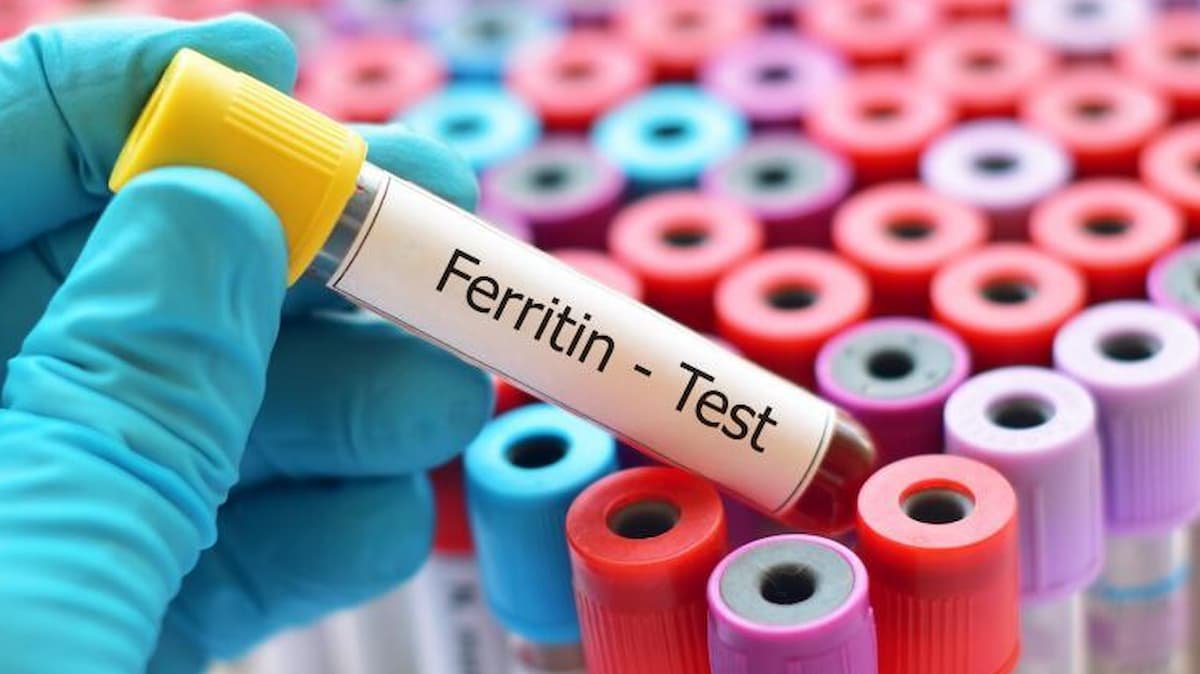
Ferritin is a protein that stores iron in the body, so a ferritin blood test gives an indication of your body’s iron stores.
Iron is particularly important for endurance athletes because it plays a key role in the production of haemoglobin, which carries oxygen around the body.
Importantly, low ferritin doesn’t necessarily mean that you are anaemic.
Iron deficiency can develop in stages. Iron stores can become depleted while haemoglobin remains within the normal range. This is known as non-anaemic iron deficiency.
This is particularly relevant if you’re a runner who is experiencing unexplained tiredness or a drop in how you feel during training.
What Ferritin Level is Considered Low?
There isn’t one universally applicable ferritin number that tells you everything about your iron status.
The British Society of Gastroenterology states that a ferritin below 15 µg/L indicates absent iron stores, while a level below 30 µg/L is generally indicative of low body iron stores. Ferritin can also be affected by inflammation, which is one reason blood results need to be interpreted in context.
My ferritin level of 17 µg/L was therefore low enough to indicate that my iron stores were depleted, despite my haemoglobin being normal.
This is an important distinction:
You can have low iron stores without having iron-deficiency anaemia.
How did Low Ferritin Affect my Energy?
Looking back, I had noticed that my energy wasn’t quite where I wanted it to be.
As someone who regularly runs and trains, it’s difficult to know whether feeling tired is simply the result of training, work, life and not getting enough recovery – or whether there is something else going on.
Tiredness and lack of energy are recognised symptoms associated with iron-deficiency anaemia, although symptoms and their severity vary between individuals.
I certainly wasn’t claiming that every tired runner has low ferritin.
But once I knew my ferritin was 17, it gave me another potential piece of the puzzle.
What did I do About my Low Ferritin?
After discussing the results with my GP, I decided to take a multi-factor approach over the following 10 weeks.
This included:
- Spatone
- Lactoferrin
- Increasing my dietary iron, including eating pigs liver twice a week
- Increasing some of my off-road running
- Changing my running shoes
I want to be clear that this was my personal approach, rather than a prescription or recommendation for everyone with low ferritin.
I also can’t say that one particular intervention caused my ferritin to increase. Several things changed at the same time.
My GP Offered me Iron Tablets
My GP offered me conventional iron tablets.
I was aware that oral iron supplements such as ferrous sulfate can cause gastrointestinal side effects, including nausea, stomach discomfort, constipation and diarrhea.
Because of my background in Nutritional Therapy and my own focus on gut health, I explained that I would prefer to use Spatone instead.
My GP was aware of my nutritional background and was happy for me to take this approach.
That doesn’t mean Spatone is necessarily better than prescribed iron for everyone. If your GP recommends iron treatment, it’s important to discuss any alternative approach with them.
Why I Used Lactoferrin
I also introduced lactoferrin.
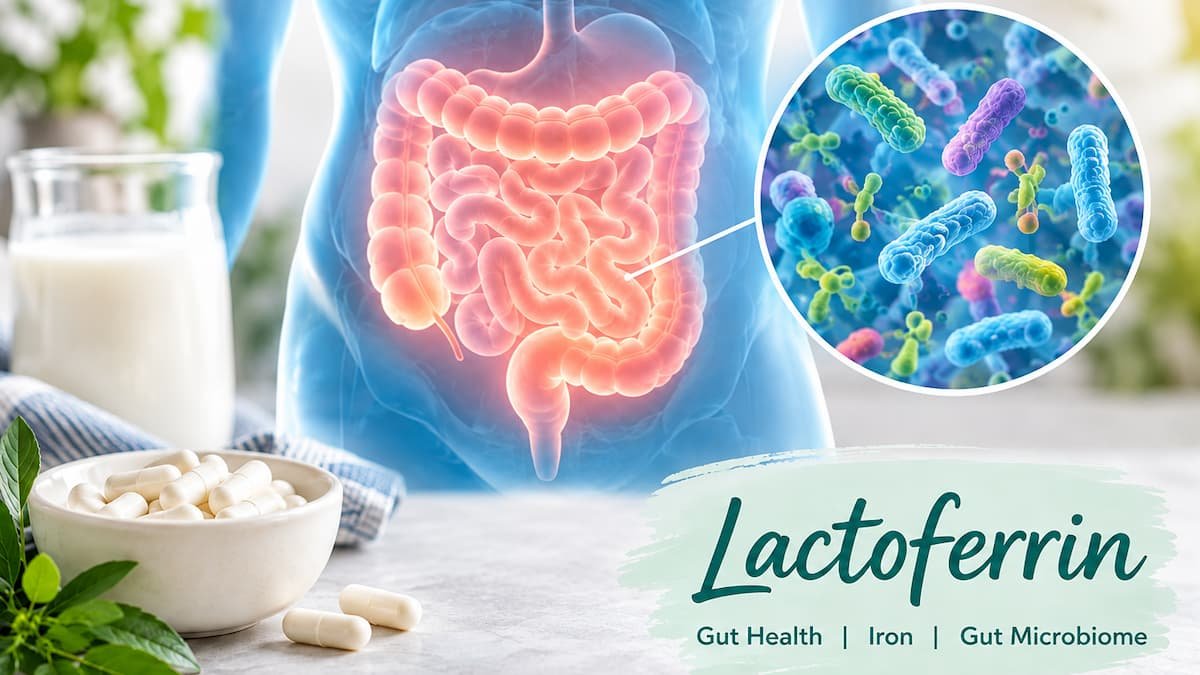
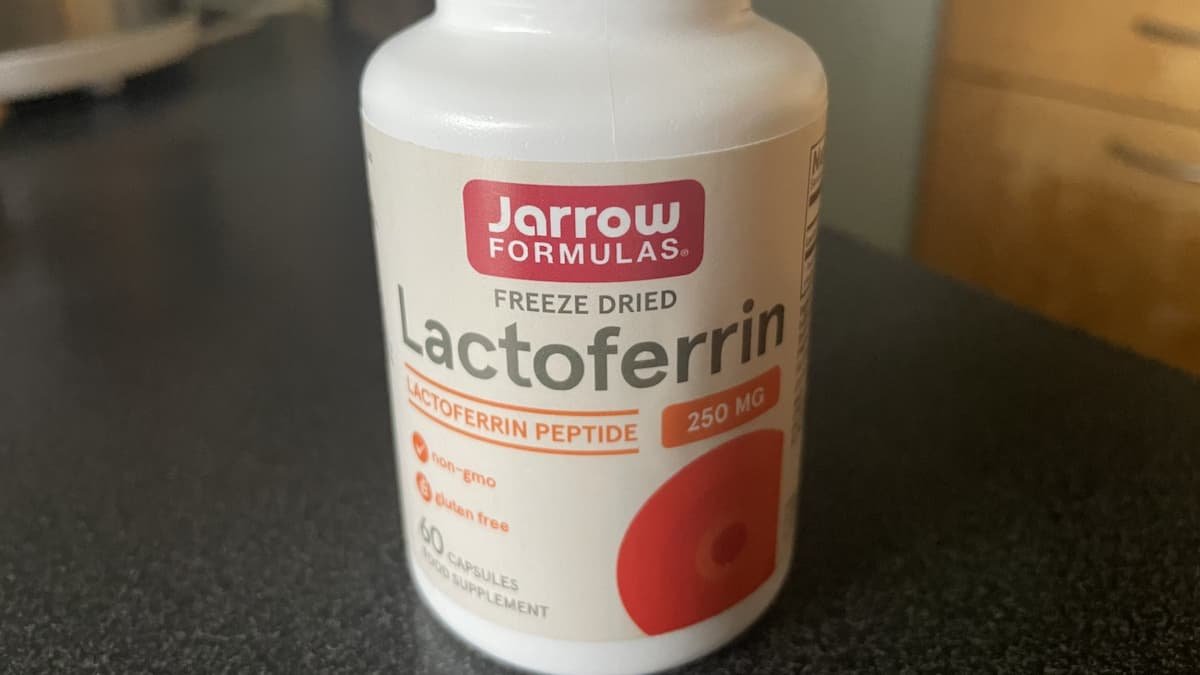
Lactoferrin is an iron-binding protein, and Jarrow Formulas Lactoferrin contains apolactoferrin, the low-iron form of lactoferrin. Lactoferrin has biological activity related to iron absorption and utilisation. It basically carries iron to where it is needed.
I’ve written more about this in my article:
I used Jarrow Formulas Lactoferrin during this period.
If you’re interested in trying it, I have a discount available through Healf:
Get 10% off via my Healf link The great thing about the link is that the 10% discount applies across the Healf store, so you can also use it on other supplements and practitioner-grade health products available through Healf.
This is an affiliate link, which means I may receive a commission if you purchase through it, at no additional cost to you.
I Also Increased my Dietary Iron
I paid more attention to getting iron from food.
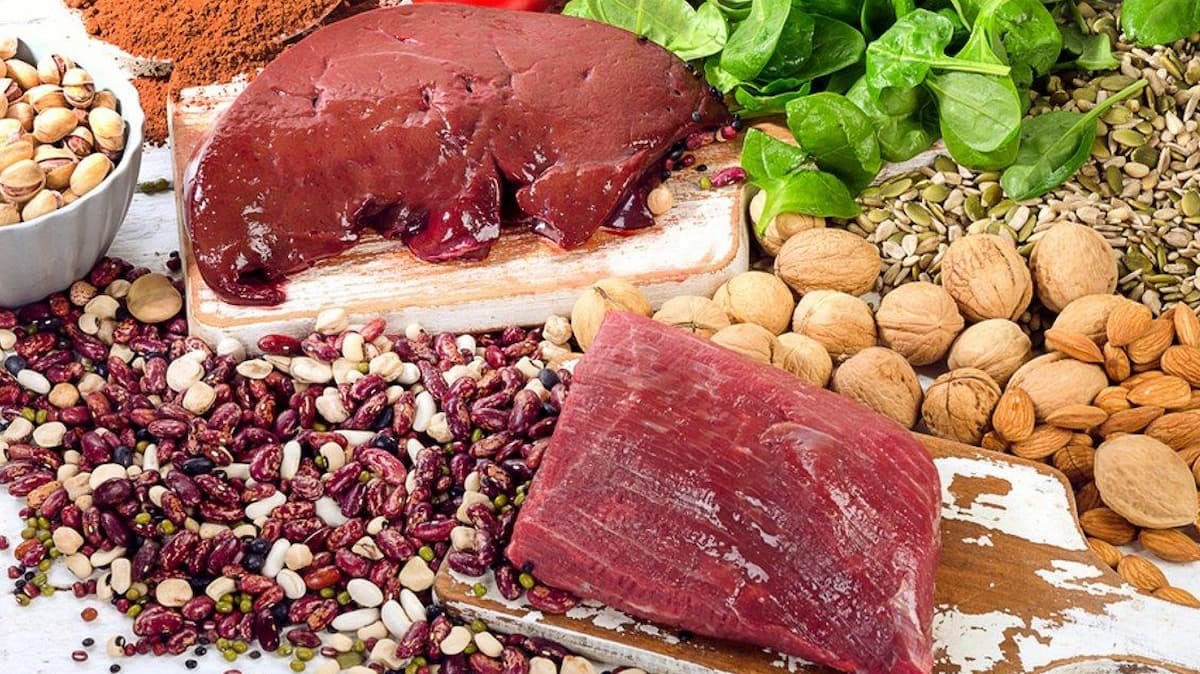
Good dietary sources of iron include red meat, organ meats such as liver, mussels, sardines, dried fruit, and fortified cereals
I also ate pigs’ liver twice a week. Pigs liver is extremely rich in iron. It also contains a very absorbable form of iron called heme iron. This form of iron is absorbed much more efficiently by the body compared to non-heme iron found in plant foods.
The NHS advises limiting liver and liver products because liver is extremely high in vitamin A. Therefore it shouldn’t be consumed more than twice a week. Also extreme caution should be taken by pregnant individuals and therefore should be discussed with a medical professional.
I also Changed my Running and Recovery
I didn’t just focus on supplements.
I also looked at my overall training and recovery. I incorporated more off-road running, changed my running shoes and became more conscious of allowing myself to recover properly.
One reason I was interested in changing my running shoes and spending more time running off-road was the potential relationship between foot-strike and haemolysis – the breakdown of red blood cells caused, in part, by the repeated mechanical impact of running.
Research has shown that foot-strike can contribute to exercise-induced haemolysis, with repeated impacts potentially increasing red blood cell damage. There is also evidence that footwear and running surfaces can influence the mechanical forces involved, although the research on whether softer surfaces consistently reduce haemolysis is mixed.
A recent systematic review of long-distance runners found evidence of transient haemolysis following marathon-distance and longer running, although the researchers noted that the clinical significance and contribution to iron deficiency remain unclear.
So I wasn’t changing my shoes or running more off-road because I believed this would automatically fix my low ferritin. It was simply another part of my overall approach to reducing unnecessary impact and looking after my recovery.
As runners, it’s easy to assume that more training is always better.
Sometimes the answer is actually to look at the bigger picture:
training + nutrition + sleep + recovery.
Iron status is just one part of that picture.
What About Low Ferritin and Gut Health?
This is an area that particularly interests me as a Nutritional Therapist.
There is a close relationship between nutrition, digestion and the absorption of nutrients. For endurance runners, gastrointestinal symptoms can also become an issue, particularly during longer or harder training sessions.
I’ve written more about this in:
Leaky Gut in Endurance Runners
I also have an article looking at non-histamine-producing probiotics and their potential role for people who are sensitive to histamine.
The important point is that if you’re struggling with low ferritin, don’t just automatically assume that taking more iron is the whole answer. Your overall diet, digestion, absorption, blood loss, training and health history may all be relevant.
Another product I use and discuss in my gut-health work is Thera Nordic Rezcue, which contains zinc carnosine and L-glutamine.
Zinc carnosine has been investigated for its effects on gut mucosal integrity and intestinal permeability, including in research involving exercise. However, the evidence is still developing, so I wouldn’t suggest that these ingredients are a treatment for low ferritin or that they were responsible for my improvement.
If you’re interested in the research and how these ingredients may support digestive health, I’ve written more in my article 6 Benefits of Zinc Carnosine and L-Glutamine: A Powerful Duo for Digestive Health.
The important point is that if you’re struggling with low ferritin, don’t just automatically assume that taking more iron is the whole answer. Your overall diet, digestion, absorption, blood loss, training and health history may all be relevant.
Ten Weeks Later: Ferritin 17 → 53
After around 10 weeks, I had another blood test.
My ferritin had increased from:
17 µg/L → 53 µg/L
And I noticed a real difference in my energy.
I felt considerably better.
I’m not suggesting that 53 µg/L is a magic number, or that everyone needs to reach exactly the same level.
It was simply the result I achieved following the changes I made.
And because I changed several things at once, I can’t say that Spatone, lactoferrin, liver, dietary changes, training changes or recovery was individually responsible for the improvement.
What I can say is that my ferritin increased significantly over that 10-week period and, from my perspective, my energy improved considerably too.
What I Learned About Low Ferritin as a Runner
My biggest takeaway was simple:
Don’t assume that normal haemoglobin means your iron status is optimal.
You can have depleted iron stores without being anaemic.
For runners, particularly endurance runners, persistent fatigue or a change in how you feel during training is worth paying attention to.
That doesn’t automatically mean you have low ferritin.
But if you’re concerned about your energy, recovery or performance, discussing your symptoms and appropriate blood tests with your GP may be worthwhile.
And if you do have low ferritin, it’s important to investigate why.
Could You Have Low Ferritin?
If you’re experiencing unexplained fatigue, poor recovery or a noticeable change in your normal energy levels, iron status could be one factor worth discussing with your GP.
A ferritin blood test can provide useful information about your iron stores, but it shouldn’t be interpreted in isolation.
Your GP can look at your full blood count and other relevant blood results alongside your symptoms and medical history.
And remember that low ferritin isn’t the same thing as iron-deficiency anaemia.
My Experience, Not a Prescription
Everything I’ve described here is based on my own experience.
I’m sharing it because I’m an endurance runner myself and because low ferritin is something that can be overlooked when haemoglobin is still normal.
It isn’t intended to replace medical advice or suggest that you should copy my approach.
If you have low ferritin, speak to your GP or another appropriately qualified healthcare professional about the best approach for you.
Iron supplementation isn’t something to take indiscriminately, as excessive iron intake can be harmful.
Could Nutritional Therapy Help?
As a Nutritional Therapist, Personal Trainer, Sports Nutritionist and England Masters distance runner, I take a practical approach to nutrition.
Rather than simply looking at one supplement or one blood marker, I look at the bigger picture – including diet, lifestyle, digestion, training, recovery and your individual circumstances.
If you’re struggling with unexplained fatigue, digestive issues, nutrition around training or simply want to improve your overall diet, you can find out more about my Nutritional Therapy services in Sutton Coldfield and online.
I also offer Personal Training and nutrition support, combining training with practical nutrition advice where appropriate.
Final Thoughts
Finding out that my ferritin was just 17 µg/L, despite not being anaemic, made me look more closely at my nutrition and recovery.
Ten weeks later, it was 53 µg/L, and I felt a significant improvement in my energy.
For me, the biggest lesson wasn’t about finding one miracle supplement.
It was about looking at the whole picture.
As runners, we’re often very good at focusing on the training.
But sometimes the things happening away from the running – nutrition, recovery, sleep and overall health – deserve just as much attention.
If you’re a runner experiencing unexplained fatigue, low energy or poor recovery, low ferritin is one of the things that may be worth discussing with your GP.